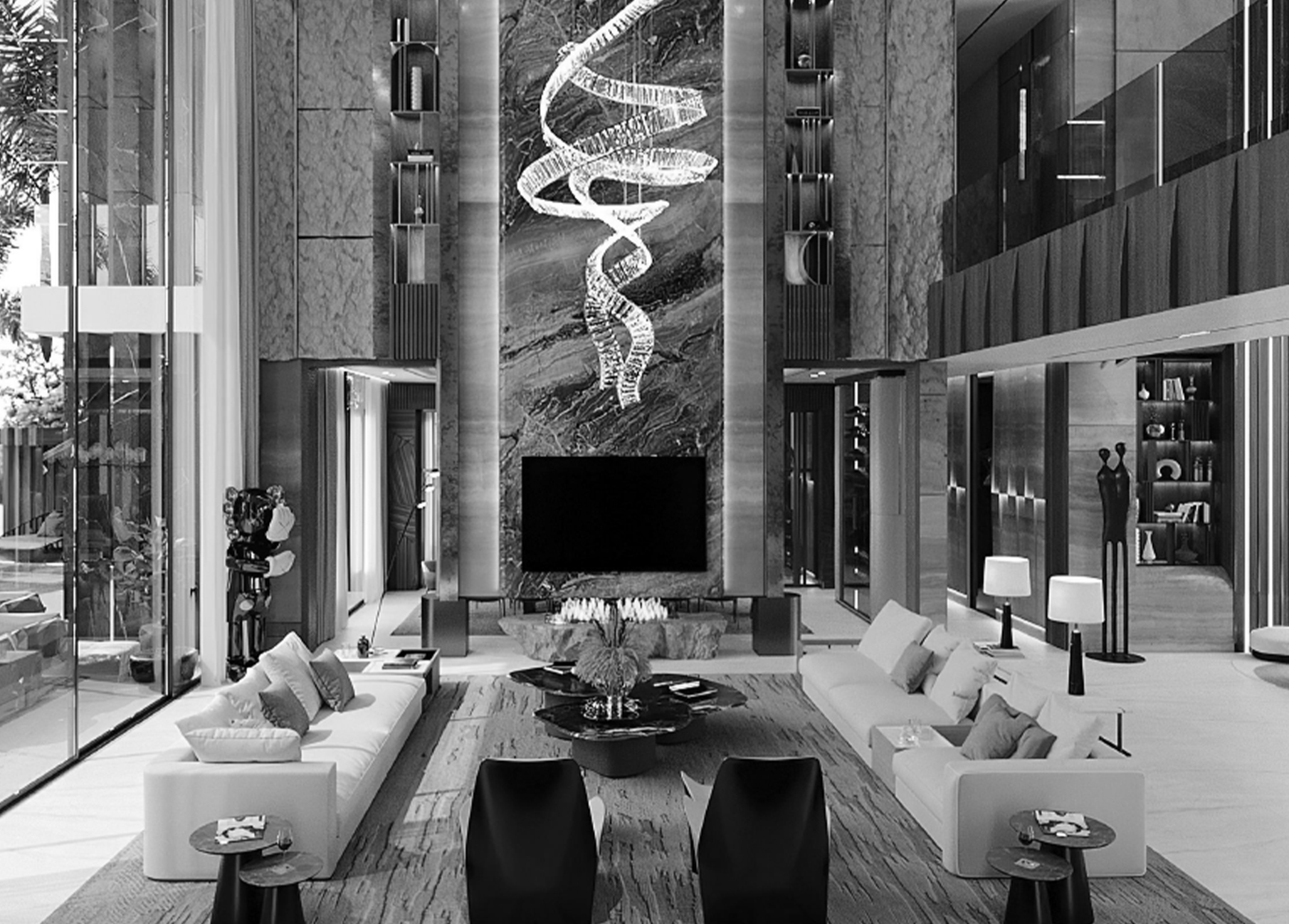
The first impression of a luxury villa lobby is shaped almost entirely by its materials, and marble is often the surface that defines that impression the most. The best Italian marble types luxury villa projects use are not necessarily the rarest stones; the right choice depends on how the space is experienced, how much visual movement the interior can handle, and whether the marble is being used as a quiet foundation or a statement feature.
Carrara and Calacatta are particularly important choices for white Italian marble, while Emperador offers an entirely different direction. One detail is easy to overlook: Emperador is generally a Spanish natural stone, not an Italian marble, but it is frequently considered alongside Italian luxury stones because of its strong presence in high-end interiors.
For villa lobbies and staircases, the most successful specification usually comes from balancing appearance with the technical demands of the installation rather than choosing a stone simply because it has a prestigious name.
Why marble works so well in a luxury villa entrance
The entrance is where scale, light, architecture and material meet. A large-format marble floor can visually connect the foyer to a sweeping staircase, while a carefully selected slab can become a focal point without adding another decorative object to the room.
Natural marble also has a quality that manufactured imitations struggle to reproduce consistently: each slab has its own distribution of veins, tone and mineral movement. That variation matters when an architect is planning a book-matched wall, a central floor pattern or a staircase that needs the veining to flow from one tread to the next. Natural Stone Institute guidance also emphasizes that stone selection should be tied to the performance requirements of the intended application, with factors such as absorption, abrasion resistance, compressive strength, flexural strength and slip resistance considered where relevant.
Marble selection, in practice, belongs at the design stage rather than after the layout is set.
For example, a double-height lobby with brass, dark timber and dramatic lighting may easily accommodate a bold Calacatta. A quieter contemporary villa with pale oak and minimalist furniture may benefit more from the restrained movement of Carrara.
The three stones at a glance
Carrara and Calacatta are both quarried in the Carrara area of Tuscany, but they differ significantly in appearance and availability. Carrara generally has softer, more subdued veining, while Calacatta is usually whiter with bolder, more noticeable veins.
Emperador belongs to a different geological and geographic category. The well-known Marron Emperador is associated with Spain, particularly areas of Valencia and Murcia, and is characterized by its dark brown base and lighter calcite veining.
Carrara marble: the most versatile choice for villa interiors
Carrara is often the safest starting point when the objective is refined luxury rather than maximum visual drama.
Its white-to-grey background and relatively delicate veining allow it to cover large areas without becoming visually overwhelming. This is part of why Carrara works well in villa lobbies, open-plan entrances and staircases that need to remain connected to the rest of the interior.
It also works across a broad range of styles. In a contemporary villa, Carrara can be paired with glass, brushed metal and minimalist furniture. In a more classical setting, it sits naturally beside bronze, timber, mouldings and decorative ironwork.
The difference becomes especially important when a staircase is part of the main architectural composition. A softly veined Carrara stair can create continuity from one level to another without competing with a sculptural balustrade or oversized chandelier.
Carrara is also generally more available than Calacatta, which can make it easier to source enough consistent material for a large project. However, “Carrara” is not a guarantee of identical appearance from one block to another. Natural stone varies, so the actual slabs should be reviewed and approved before fabrication.
Where Carrara makes the most sense
For a large entrance hall, Carrara can be used across the floor and staircase while allowing lighting, furniture and architectural details to provide contrast. It is particularly effective when the design calls for a bright space that should feel luxurious without becoming overly ornate.
A useful design approach is to use larger slabs with carefully aligned joints and keep the surrounding materials restrained. The result feels expensive because of proportion and continuity rather than decoration.
Calacatta marble: when the marble should become the feature
Calacatta takes a different approach. Instead of quietly supporting the architecture, it can become part of the architecture's visual identity.
The classic distinction in Carrara vs Calacatta marble is the intensity of the veining. Carrara usually reads as softer and greyer, while Calacatta is typically brighter with wider and more dramatic veins that can include grey, beige or gold tones depending on the variety. Calacatta is also generally less readily available than Carrara.
This is exactly the quality that makes Calacatta a strong option for entrances designed around a single focal point
A tall wall behind a staircase, a large reception floor, or a central island-like feature are typical examples. A strong Calacatta slab can carry the visual weight of such a feature without requiring elaborate ornament.
The stone is especially effective when the slab is large enough for the veining to be appreciated. Book matching can intensify this effect by mirroring adjacent slabs so that the natural movement creates a symmetrical composition.
An Italian private-residence project documented by Marble Project, for example, used book-matched Calacatta for reception-room floors and Calacatta again for the staircase, demonstrating how a single stone can connect horizontal and vertical architectural surfaces.
Is Calacatta suitable for a staircase?
It can be, as long as the stone, finish, fabrication and installation are specified correctly for stair use.
The key issue is that visual luxury does not automatically equal technical suitability. Stair treads are subject to repeated foot traffic, impact at edges and cleaning. The Natural Stone Institute recommends selecting stone according to the actual performance requirements and using relevant test data where necessary.
For that reason, a premium staircase specification should consider more than the name of the marble. The project team should review the particular slab, thickness, support conditions, edge details, surface finish and slip requirements.
Emperador: a warmer alternative to white Italian marble
For a villa interior built around dark timber, warm metals or earthy tones, an all-white marble palette is not always the strongest option. This is where Emperador becomes interesting.
Marron Emperador typically ranges from brown to deep chocolate tones with lighter calcite veining. Its darker background gives a room more visual weight than Carrara or Calacatta and can create a dramatic contrast against pale walls or metal detailing.
It is a particularly useful choice when the goal is to make a staircase feel sculptural rather than simply bright. Italian stone companies have also used Emperador in luxury staircases and high-end residential applications, demonstrating that it can work successfully in sophisticated architectural settings despite its Spanish origin.
The important point for material specifications is to label it accurately. Calling Emperador “Italian marble” may be commercially common in some markets, but it obscures its origin. A more precise description is premium Emperador natural stone used alongside Italian marble.
Which marble is best for a villa lobby?
For most projects, there is no single winner because the lobby and staircase may play different visual roles.
Carrara tends to work best when you want continuity, lightness and understated elegance. Its softer veining can cover a larger floor without dominating the room.
For a hero material, Calacatta is the stronger candidate the entrance needs a hero material. Its stronger veining can establish a visual centre and work particularly well in large, carefully detailed spaces.
Warmth and depth, on the other hand, point toward Emperador brown stone becomes part of a palette that includes timber, bronze, black metal or cream textiles.
A useful specification method is to ask three questions before choosing the slab: Will the stone be the background or the focal point? How much natural and artificial light will hit it? And will the same material continue onto the staircase or other major surfaces?
Those questions are more useful than simply asking which stone is the most luxurious.
Choosing marble for luxury staircases: finish matters too
A staircase needs a different level of attention than a purely decorative wall.
Polished marble is visually striking because it creates strong reflections and emphasizes colour and veining. It can be excellent for selected vertical surfaces and areas where visual impact is the priority. On walking surfaces, however, the finish needs to be evaluated in relation to slip performance, cleaning conditions and the actual installation environment. The Natural Stone Institute specifically includes slip resistance among the performance tests that may be relevant to stone subjected to foot traffic.
Honed finishes provide a softer, less reflective appearance and can change how a marble reads under architectural lighting. They may also be preferable where reducing the mirror-like character of a polished floor is part of the design intent.
The correct answer depends on the project. There is no universal rule that every marble staircase should be polished or every lobby floor should be honed. Finish, stone type, lighting, traffic and safety requirements should be considered together.

images by @castello

images by @castello